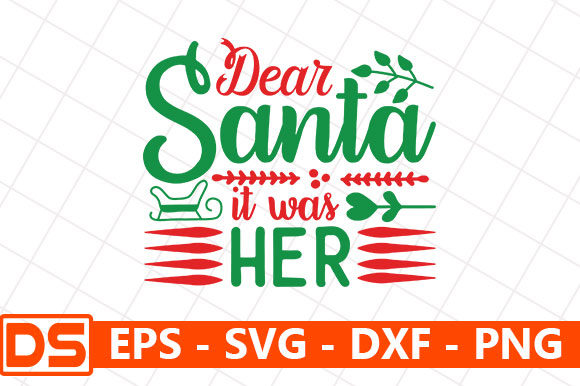
Reviewing Dear Santa It Was Her for Holiday Embroidery
As a designer who has spent countless hours digitizing and stitching out holiday motifs, I approach every new machine embroidery design with a mix of curiosity and caution. The holiday season is saturated with generic snowflakes and standard Santa faces, so when I encountered Dear Santa It Was Her, I was immediately intrigued by its narrative potential. This isn’t just a decorative element; it is a statement piece. For those of us in the crafts industry, specifically those running small shops or selling on Etsy, finding designs that spark conversation is half the battle. This review breaks down how this specific graphic performs in real-world applications, from digitizing considerations to final product presentation.
First Impressions and Visual Personality
The phrase "Dear Santa, it was her" carries a playful, mischievous tone that instantly sets it apart from traditional, solemn holiday decor. Visually, the design relies heavily on typography, which means the success of the stitch-out depends entirely on font choice and spacing. In my initial assessment, the layout feels balanced for horizontal applications. It does not scream for attention with excessive embellishments, which is a strength. It allows the message to do the heavy lifting. For embroidery designers, this means we are dealing primarily with text-based graphics rather than complex pictorial elements. This simplicity is advantageous for production speed but demands precision in letter formation to ensure legibility.
Real-World Application: The Custom Sweatshirt Test
To truly evaluate an embroidery file, you must imagine it on a tangible product. I visualized this design centered on the chest of a heather grey crewneck sweatshirt. This is a classic custom apparel scenario. The contrast between the dark thread typically used for text and the soft, textured fabric of a sweatshirt creates a cozy, high-end look. However, because this is a quote, the scale is critical. If stitched too small, the letters merge, especially on textured fabrics like fleece or terry cloth. I recommend sizing this design to at least four inches wide for adult garments to maintain clarity. For a personalized gift, this placement feels intimate yet bold enough to be noticed in social settings, making it a strong seller for holiday parties.
Versatility Across Product Lines
Beyond apparel, this design shines in home goods. Imagine it stitched onto a canvas tote bag design. Canvas provides a stable, flat surface that supports crisp lettering without the puckering risks associated with stretchy knits. It also works beautifully on kitchen towels for a humorous touch during holiday dinners. For Etsy sellers looking to diversify, this design can be adapted for pillow covers or even as part of a larger holiday embroidery collection featuring matching sibling sets. The key is consistency. If you use this design on a cap, ensure the curvature of the front panel does not distort the text. Caps require careful hooping and often a backing stabilizer to prevent the fabric from pulling away from the stitches.
Technical Considerations for Stitching
When working with text-heavy designs, technical execution is paramount. Here are the practical notes I keep in mind before hitting the start button on my machine:
- Stitch Density and Type: Check if the file uses satin stitch or fill stitch for the letters. Satin stitches offer a shiny, premium look but can snag if the columns are too wide. Fill stitches are more durable for items that will be washed frequently, such as baby clothes or kitchen linens.
- Stabilizer Selection: Always use a cut-away stabilizer for knit fabrics like t-shirts and sweatshirts to prevent distortion over time. For woven fabrics like tote bags or aprons, a tear-away may suffice, but test first.
- Thread Color Contrast: Since this is a readable quote, high contrast is essential. White thread on dark navy or black thread on cream works best. Avoid low-contrast combinations like grey on white, which can make the text difficult to read from a distance.
- Hoop Size: Confirm your hoop size before purchasing or downloading. While the description mentions various file formats, always verify the dimensions fit your specific machine’s maximum hoop area to avoid resizing, which can alter stitch density negatively.
Navigating File Formats and Usage Rights
The product description indicates that the ZIP file contains EPS, SVG, PNG, and DXF files. This is an important distinction for multi-disciplinary creators. While these formats are excellent for cut machines, vinyl decals, and scrapbooking, they are not native digital embroidery file formats like PES, DST, or JEF. If you are an embroiderer, you must ensure you have the correct embroidery-specific formats or the skills to digitize the SVG/EPS vectors into stitch files yourself. Using a vector file directly in embroidery software without proper digitizing parameters can lead to poor stitch quality, excessive thread breaks, and fabric bunching. For those using cut machines, these files are ready to go for vinyl heat transfers, which can be combined with embroidery for mixed-media design assets.
Commercial Use and Brand Consistency
For small shop product lines, consistency builds brand trust. If you are selling this as part of a commercial embroidery lineup, ensure the licensing allows for finished product sales. Most designers allow this, but always read the specific terms. Using this design on a printed mockup for your online store can help customers visualize the final result. Show the design on different backgrounds—light and dark—to demonstrate versatility. This transparency reduces return rates and increases buyer confidence.
Potential Pitfalls and How to Avoid Them
While Dear Santa It Was Her is a charming design, it is not without its challenges. Tiny lettering is the enemy of embroidery. If you attempt to shrink this design for a baby onesie or a small patch, the internal spaces of letters like 'e', 'a', and 'o' may close up. Always stitch a test sample on scrap fabric identical to your final product. Check for stitch density issues; if the letters are too dense, they can create a stiff, cardboard-like feel on soft garments. Additionally, avoid using this design on highly textured fabrics like chunky knits unless you use a topping stabilizer to keep the stitches sitting on top of the fibers rather than sinking in.
Final Verdict for Makers and Designers
In the crowded market of holiday embroidery, Dear Santa It Was Her offers a refreshing blend of humor and style. It is best suited for projects where readability and personality are prioritized. Whether you are creating a handmade product for a friend or stocking your online boutique, this design holds up well when executed with proper technical care. Remember to respect the limitations of your machine and fabric. By choosing the right stabilizer, thread colors, and hoop size, you can transform this digital graphic into a cherished finished product. For craft business owners, this design represents a low-risk, high-reward addition to your seasonal catalog, provided you verify the file compatibility for your specific workflow. Happy stitching!