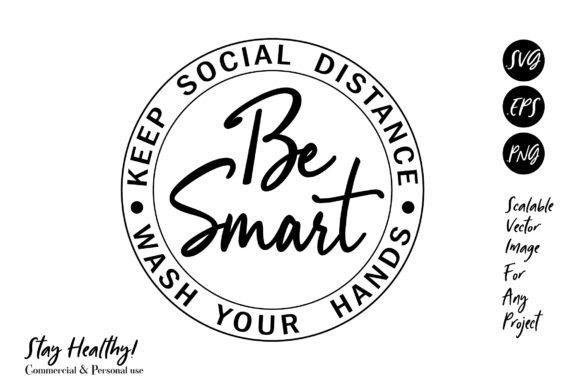
Reviewing Be Smart, Keep Distance, Wash Your Hands
As a designer who spends more time staring at stitch simulations than I do sleeping, I have learned that not every graphic translates well to thread. We often see trendy Illustrations and Graphics online that look crisp on a screen but turn into a tangled mess under the needle. Recently, I evaluated the Be Smart, Keep Distance, Wash Your Hands design set to determine if it holds up for real-world embroidery projects. This is not just about aesthetics; it is about functionality, durability, and commercial viability for small business owners and hobbyists alike.
First Impressions and Visual Personality
The first thing that strikes you about Be Smart, Keep Distance, Wash Your Hands is its clarity. In an era where health awareness has become part of our daily visual language, this design avoids being overly clinical or alarmist. Instead, it offers a friendly, approachable reminder. The circular virus motif provides a contained shape that is naturally pleasing to the eye and easy to frame within standard hoop sizes.
From a layout perspective, the integration of the quote within the graphic element is smart. It creates a self-contained badge-like appearance. For an embroidery designer, this is crucial. Self-contained designs are easier to position on garments because they do not require complex alignment with seams or pockets. The mood is responsible yet gentle, making it suitable for a wide range of audiences, from healthcare workers to parents managing school routines.
Real-World Application: The Tote Bag Test
To truly understand how a design performs, you must imagine it on a physical product. I visualized this design stitched onto a heavy canvas tote bag. Canvas has a distinct weave, and the texture can sometimes swallow fine details. However, because Be Smart, Keep Distance, Wash Your Hands relies on bold shapes and clear typography rather than intricate shading, it stands out beautifully against the rougher fabric texture.
Imagine a local boutique selling reusable bags. Adding this embroidered patch elevates the item from a simple utility product to a statement piece. It signals that the brand cares about community health. For an Etsy seller, this kind of thoughtful detail increases perceived value. Customers are not just buying a bag; they are buying a personalized gift that reflects their values. The design works equally well on a cotton apron for a café or a linen tea towel for a kitchen, proving its versatility across different handmade products.
Stitching Considerations and Technical Performance
When we move from concept to execution, technical details matter. The product description notes that the set includes SVG files for layered cutting and PNGs at 300 dpi. For those of us working with embroidery machines, this distinction is vital. While the PNG is excellent for printable mockups or sublimation, embroidery requires specific digitizing. If you are using this as a reference for manual digitizing or converting it, pay close attention to stitch density.
The circular nature of the virus icon suggests that a combination of fill stitch for the body and satin stitch for the border would work best. Satin stitches provide a shiny, professional edge that defines the shape, while fill stitches ensure coverage. However, be cautious with the text. Small lettering in embroidery can easily become illegible if the stitches are too dense or if the thread color lacks contrast. I recommend testing the design on scrap fabric first. Check if the letters "Keep Distance" remain readable when stitched out in smaller hoop sizes.
For those using pre-digitized versions of this design, always check the stitch count. High-density areas can cause puckering, especially on thinner fabrics like t-shirts. Using a proper stabilizer is non-negotiable here. A cut-away stabilizer is ideal for garments that will be washed frequently, ensuring the design remains flat and does not distort over time.
Fabric Choices and Color Contrast
The success of Be Smart, Keep Distance, Wash Your Hands heavily depends on your choice of thread colors and fabric. On dark fabrics, such as navy sweatshirts or black caps, you need high-contrast thread colors. White or light blue threads will pop, making the message instantly readable. On light fabrics, consider using darker blues or greens to maintain visibility.
Textured fabrics like towels or fleece require adjustments. The loops in terry cloth can hide fine details. In these cases, simplifying the design or increasing the size ensures the message is not lost. For baby embroidery items, softness is key. Ensure that the back of the stitching is covered or that the design uses lighter density to prevent irritation against sensitive skin. A soft backing or careful trimming of jump stitches is essential for comfort.
Commercial Viability for Small Shops
For craft business owners, time is money. Designs that are quick to stitch and have low failure rates are gold. Be Smart, Keep Distance, Wash Your Hands fits this criteria if managed correctly. Its modular nature allows for scaling. You can shrink it for a pocket logo on a custom apparel piece or enlarge it for a back panel on a jacket.
This versatility makes it a strong candidate for commercial embroidery projects. Schools, clinics, and local businesses often look for relevant, timely designs for staff uniforms or promotional items. By offering this design on sweatshirt embroidery or embroidered patches, you tap into a market that values both style and social responsibility. It is not just a trend; it is a lasting reminder that resonates with buyers.
Practical Designer Notes
Before you commit to a large production run, keep these practical tips in mind:
- Test on Scrap Fabric: Always stitch a sample on the same material you plan to use for the final product. This reveals issues with tension and density.
- Check Licensing: The product includes SVG and PNG files. Confirm whether the license allows for commercial use of finished items. Some digital embroidery file licenses restrict mass production.
- Contrast is Key: Use black and white mockups to test readability. If the design disappears in grayscale, it will likely fail on low-contrast fabrics.
- Hoop Size Matters: Ensure your hoop size accommodates the full 12-inch height if you are printing, but for embroidery, scale appropriately. Smaller hoops may require resizing the design, which can affect stitch quality.
- Stabilizer Selection: Match your stabilizer to your fabric. Knits need stretch support; wovens need tear-away or cut-away depending on permanence.
Final Verdict
The Be Smart, Keep Distance, Wash Your Hands design is a solid addition to any designer’s library. It balances contemporary relevance with timeless design principles. While it requires careful attention to stitch density and color contrast, the result is a professional, engaging piece that enhances any finished product. Whether you are creating holiday embroidery gifts or stocking your small shop product line, this design offers the flexibility and impact needed to succeed. Just remember to respect the technical limits of your machine and fabric, and you will create items that customers are proud to wear and share.