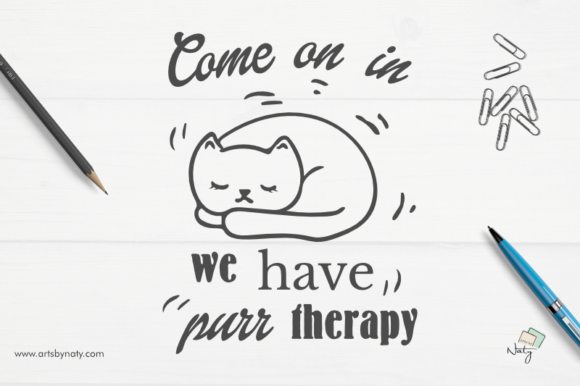
Reviewing Come on in, We Have Purr Therapy for Embroidery
As a designer who has spent countless hours digitizing and stitching thousands of motifs, I have learned that the most successful projects are not always the most complex. Sometimes, a simple, well-executed concept carries more weight than an intricate masterpiece. Recently, I evaluated Come on in, We Have Purr Therapy, a sleeping cat quote illustration, to determine its viability for real-world embroidery applications. This is not just a digital asset; it is a potential cornerstone for a craft business or a heartfelt personalized gift.
First Impressions: Mood and Visual Personality
The immediate appeal of Come on in, We Have Purr Therapy lies in its relaxed, inviting energy. The combination of a sleeping cat and the witty text creates a mood of domestic tranquility and humor. For embroidery designers, this is crucial. We are not just stitching thread; we are stitching emotion. The layout appears balanced, with the organic curves of the feline form complementing the linear structure of the typography. This contrast is essential for visual interest. If the text were too rigid or the cat too abstract, the design would lose its charm. Instead, it feels cohesive, making it an excellent candidate for home decor and casual apparel.
From a technical standpoint, the illustration falls under the category of Illustrations and Graphics, which means the digitizer must pay close attention to how these vector-like shapes translate into stitch paths. A poor conversion can result in jagged edges or lost details. However, the clean lines suggested in the preview indicate that this design has been prepared with care, likely utilizing a mix of satin stitches for outlines and fill stitches for the cat’s body to ensure smooth coverage.
Real-World Application: The Tote Bag Test
To truly understand the value of a machine embroidery design, you must visualize it on a finished product. I imagined applying this design to a heavy canvas tote bag, a popular item for Etsy sellers and small shop owners. The phrase "Come on in" suggests hospitality, making the tote perfect for library visits, grocery runs, or as a welcoming gift for a new homeowner.
In this scenario, the size of the design is critical. On a standard tote, the design needs to be large enough to be legible from a distance but not so large that it distorts the fabric. The sleeping cat serves as a focal point, drawing the eye before the viewer reads the pun. This hierarchy is vital for customer engagement. When a buyer sees a handmade product like this, they are buying into a lifestyle. The cute illustration acts as a hook, while the quality of the stitching confirms the value.
Apparel and Custom Gifts
Beyond totes, this design shines in custom apparel. Imagine it embroidered on the chest of a oversized sweatshirt or the back of a denim jacket. The "purr therapy" message resonates deeply with pet owners, a massive demographic in the handmade market. For baby embroidery, such as a onesie or a nursery blanket, the soft imagery of a sleeping animal is naturally appealing. However, one must be cautious with scale. What looks adorable on a pillow might look cluttered on a tiny infant garment. Always adjust the hoop size and scaling to fit the substrate.
For holiday gifts, this design is versatile. It fits seamlessly into holiday embroidery collections, particularly for housewarming parties or birthdays. A set of kitchen towels featuring this motif could become a bestseller for a boutique brand. The key is consistency. If you are building a brand around cozy, pet-friendly aesthetics, Come on in, We Have Purr Therapy aligns perfectly with that narrative.
Technical Considerations for Stitching Success
While the aesthetic is strong, the practical execution requires attention to detail. As an experienced reviewer, I advise checking several technical aspects before committing to a full production run.
- Stitch Density and Fabric Texture: The cat illustration likely uses fill stitches. On thin or stretchy fabrics, high stitch density can cause puckering. Always use an appropriate stabilizer. For knits, a cut-away stabilizer is recommended to support the weight of the thread. For woven fabrics like linen or cotton, a tear-away may suffice, but test first.
- Thread Colors and Contrast: The readability of the quote depends heavily on thread choice. If you are stitching on a dark fabric, ensure the text uses a light, high-contrast thread color. Conversely, on white fabric, avoid light pastels for the text unless you want a subtle, watermark effect. Test your thread colors on scrap fabric identical to your final product.
- Small Details and Lettering: Tiny lettering can be problematic in embroidery. If the font in the embroidery file is too small, the stitches may merge, making the words illegible. Inspect the design at 100% zoom. If the letters are thinner than 3mm, consider resizing the design or choosing a bolder font variant if available.
- Hoop Size and Placement: Confirm the required hoop size before purchasing. If the design is larger than your standard 5x7 hoop, you will need a larger machine or a multi-positioning technique, which increases the risk of misalignment. For curved surfaces like caps, ensure the design is digitized specifically for caps, as standard flat embroidery will distort on the brim.
Commercial Viability for Etsy Sellers and Makers
For the Etsy seller or creative entrepreneur, the commercial potential of this design is significant. Pet-themed items consistently perform well in online marketplaces. However, success depends on presentation. Use high-quality printable mockup images to showcase the design on various products before you stitch a single thread. This allows you to gauge customer interest and refine your marketing strategy.
When selling finished products, transparency about the design source is important. Ensure you have the correct license for commercial use. Most digital embroidery files come with specific terms regarding how many physical items you can sell. Never assume; always read the license agreement provided by the designer. This protects your craft business from legal issues and builds trust with your customers.
Furthermore, consider offering this as part of a collection. Pair Come on in, We Have Purr Therapy with other pet-themed designs to create a cohesive shop aesthetic. This encourages bundle purchases and increases the average order value. Whether you are creating embroidered patches, aprons, or pillow covers, the consistency of your design assets strengthens your brand identity.
Final Verdict: A Practical Addition to Your Library
In conclusion, Come on in, We Have Purr Therapy is a charming and commercially viable design for those who understand the nuances of embroidery production. It is not just a cute picture; it is a strategic asset for makers looking to connect with pet lovers. Its strength lies in its emotional resonance and versatile application across various textiles.
However, its success relies on your technical execution. Do not skip the test stitch. Pay attention to stabilizer choice, thread tension, and fabric compatibility. By treating this digital embroidery file with the respect it deserves, you can transform a simple graphic into a high-value personalized gift or a standout item in your small shop. For designers seeking reliable, engaging content that balances whimsy with professionalism, this illustration is a worthy addition to your portfolio.