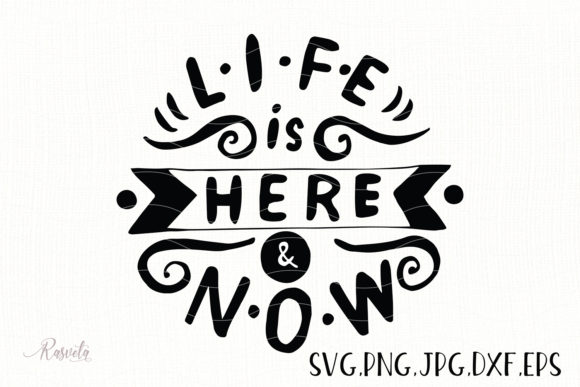
Reviewing Life is Here and Now for Real Embroidery Projects
As a designer who has spent years digitizing patterns and stitching out countless samples, I have learned that not every beautiful graphic translates well to thread. When I first encountered Life is Here and Now, my initial reaction was one of appreciation for its minimalist elegance. This piece falls under the category of Illustrations and Graphics, specifically featuring hand-lettered typography that resonates with the current trend toward mindfulness and presence. However, aesthetic appeal is only half the battle. The real question for any serious crafter or Etsy seller is how this design performs when subjected to the mechanical realities of an embroidery machine.
The Visual Personality and First Impressions
The phrase "Life is Here and Now" carries a inherent calmness. In its digital format, likely available as an SVG or PNG for various uses, the hand-lettering style suggests a human touch that is often lost in rigid, computer-generated fonts. For an embroidery project, this organic feel is a double-edged sword. On one hand, it offers a warm, approachable vibe perfect for a personalized gift or boutique branding. On the other hand, hand-lettered designs often feature varying line weights and tight curves that can be tricky to stitch cleanly without proper digitizing.
When evaluating this as a potential machine embroidery design, I look immediately at the flow of the letters. Does the text maintain legibility when scaled down? Is the spacing consistent enough to prevent thread bunching? The mood created by this design is serene and grounding, making it an ideal candidate for items intended to promote relaxation, such as yoga studio decor, meditation cushions, or soft home textiles.
Real-World Application: The Tote Bag Test
To truly understand the value of Life is Here and Now, I imagined a specific real-life scenario: creating a custom tote bag design for a local wellness shop. The client wanted something understated yet impactful. I visualized placing this quote on a heavy canvas tote, using a natural linen thread to contrast subtly against the raw fabric.
In this context, the design shines. The horizontal layout of the text fits perfectly within standard hoop sizes, allowing for a clean, centered placement. Unlike complex applique design work that requires multiple fabric layers and trims, a text-based graphic like this relies heavily on stitch type. If digitized correctly, using a combination of satin stitch for smaller details and a light fill stitch for larger letter bodies, the result would be textured and tactile. The customer isn’t just buying a bag; they are buying a feeling of presence, stitched directly into their daily carry item.
Versatility Across Product Lines
Beyond tote bags, this graphic has significant potential in custom apparel. Imagine it embroidered on the left chest of a high-quality cotton sweatshirt. The sweatshirt embroidery market is saturated with generic slogans, but a mindful quote like this appeals to a niche audience willing to pay for meaning. It also works beautifully for baby embroidery projects, such as a muslin swaddle or a nursery wall hanging, where the gentle message aligns with the softness of the materials.
For small shop product lines, consistency is key. Using Life is Here and Now across a collection—perhaps on aprons for kitchenware, pillow covers for home decor, and even as a small detail on embroidered patch merchandise—creates a cohesive brand identity. It signals to buyers that the creator values mindfulness and quality, enhancing customer trust and brand consistency.
Technical Considerations and Stitching Challenges
While the concept is strong, the execution requires careful attention. Hand-lettering often includes thin strokes that may disappear if the stitch density is too low, or pucker the fabric if it is too high. When working with this type of digital embroidery file, I always advise checking the stitch count and pathing. A poorly digitized version might use too many running stitch elements that look messy on textured fabrics.
Fabric choice plays a crucial role. On smooth, tightly woven cotton, the design will appear crisp. However, on textured fabrics like terry cloth towels or fuzzy fleece, fine details can get lost. In these cases, increasing the stitch width slightly or choosing a bolder thread weight can help maintain stitching clarity. Additionally, when stitching on stretchy fabrics like jersey t-shirts, using the correct stabilizer is non-negotiable. Without proper support, the letters may distort after washing, ruining the finished product.
Navigating Dark Fabrics and Contrast
One common mistake makers make is ignoring contrast. If you plan to stitch Life is Here and Now on a dark navy hoodie, using black thread will render the design invisible. Always test your thread colors against the fabric background. A metallic gold or a bright white can pop beautifully against dark backgrounds, adding a premium feel to the item. Conversely, on light fabrics, subtle tones like sage green or slate blue can provide a sophisticated, understated look that appeals to modern aesthetics.
Commercial Viability and Licensing
For craft business owners and commercial embroidery professionals, understanding licensing is critical. Since this product is listed with formats like SVG, EPS, and DXF, it is primarily marketed as a graphic asset for cutting machines or print. However, many designers also offer machine-compatible formats like PES or DST. Before selling items made with this design, you must confirm whether the license allows for commercial use of finished goods. Some licenses permit selling physical items but prohibit reselling the digital file itself.
Assuming the appropriate rights are secured, this design adds value because it taps into the evergreen wellness market. It is not a seasonal trend like holiday-specific graphics, meaning it can be part of your core inventory year-round. This stability helps in planning production schedules and managing stock for your small business merchandise.
Practical Designer Notes for Best Results
To ensure the highest quality outcome when using Life is Here and Now, follow these practical steps:
- Test on Scrap Fabric: Always stitch out a sample on the same material you intend to use for the final product. This reveals issues with tension, density, or registration.
- Check Hoop Size: Ensure the design fits comfortably within your hoop with adequate margin for stabilization. Crowding the edges can lead to hooping marks or uneven stitching.
- Inspect Small Details: Zoom in on the digital file. Are there tiny dots or loose ends that might cause thread breaks? Clean up any unnecessary nodes if you are editing the SVG before digitizing.
- Mockup in Black and White: Convert the design to grayscale to check for contrast and readability without the distraction of color. If it looks good in black and white, it will look good in any color combination.
- Verify File Formats: The product description mentions SVG, PNG, JPG, EPS, and DXF. These are primarily vector and raster graphics files. If you are using an embroidery machine, you will need to digitize these files or purchase a separate machine-specific format if available. Do not assume an SVG file can be directly read by all embroidery machines without conversion software.
Final Thoughts on Design Value
In the world of handmade goods, the difference between a good product and a great one often lies in the details. Life is Here and Now offers a compelling blend of meaningful content and versatile design. When approached with technical precision and creative insight, it can elevate a simple textile into a cherished keepsake. Whether you are creating a holiday embroidery gift for a friend or stocking your online store with mindful apparel, this design provides a solid foundation for success. Just remember to respect the technical constraints of embroidery, choose your materials wisely, and always prioritize the tactile experience of the final user.