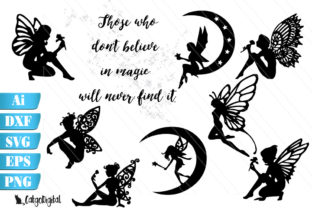
Fairy Vector Silhouettes: A Designer’s Real-World Review
As an embroidery designer who spends more time staring at stitch maps than I do sleeping, I have learned to be skeptical of digital assets that promise magic but deliver headaches. When I first opened the folder for Fairy Vector Silhouettes, I was not looking for pretty pictures. I was looking for clean lines, logical node placement, and versatility. In the world of Crafts and digital Graphics, a silhouette is only as good as its edge definition. After putting these files through their paces on various fabrics and hoop sizes, I am ready to share my honest assessment of how this collection performs in a real production environment.
First Impressions: Mood and Visual Personality
The immediate appeal of Fairy Vector Silhouettes lies in its whimsical yet grounded aesthetic. The inclusion of the quote, Those who don t believe in magic will never find it, adds a narrative layer that transforms a simple shape into a story. For embroidery, this is crucial. We are not just stitching thread; we are selling a feeling. The silhouettes themselves are elegant, avoiding the jagged, pixelated edges that often plague lower-quality vector conversions. This smoothness suggests that when converted into a machine embroidery design, the resulting satin or running stitches will follow a natural path without excessive needle penetrations that can perforate delicate fabrics.
The mood is distinctly ethereal, making it a perfect candidate for projects that require a touch of nostalgia or wonder. It does not scream for attention with loud colors or complex shading. Instead, it relies on form. This minimalism is a strength for the modern Etsy seller or boutique owner who values subtle branding over flashy graphics. It feels like a design that belongs on a heirloom piece rather than a disposable trend item.
Real-World Application: From Digital File to Finished Product
To truly test the viability of any embroidery file, you must imagine it on actual goods. I visualized this design on a canvas tote bag design. The contrast of a dark fairy silhouette against natural beige cotton creates a striking, high-end look. Because the design is a silhouette, it works exceptionally well as a single-color stitch-out, which reduces thread costs and machine time—a critical factor for any craft business managing margins.
I also considered its application in custom apparel, specifically a heather grey sweatshirt embroidery project. The quote included in the package offers a wonderful opportunity for mixed-media styling. Imagine the fairy silhouette stitched in a deep charcoal thread, with the accompanying text done in a delicate script font. This combination elevates the garment from basic merchandise to a personalized gift that customers are willing to pay a premium for. The design’s balance allows it to sit comfortably on the left chest of a hoodie or centered on the back of a tee without overwhelming the wearer.
For those creating baby embroidery items, such as nursery wall hangings or soft blankets, the gentle curves of the fairy wings translate beautifully. However, caution is advised regarding scale. While the vector nature allows for infinite resizing, the intricacy of the wing tips must be monitored to ensure they do not become too fine for the chosen stabilizer and fabric combination.
Navigating Technical Challenges and Fabric Constraints
No design is universal, and Fairy Vector Silhouettes requires thoughtful adaptation depending on the substrate. When working with textured fabrics like terry cloth towels or fluffy fleece, the fine details of the silhouette may get lost. In these cases, I recommend increasing the stitch width slightly or opting for a fill stitch rather than a simple outline to ensure visibility. Conversely, on thin, stretchy fabrics like jersey knits, the density of the stitch file becomes paramount. If the original vector is converted into a dense satin stitch, it may cause puckering. Always use a cut-away stabilizer for knitwear to maintain the integrity of the finished product.
Dark fabrics present another challenge. Since this is a silhouette, it relies on contrast. Stitching a black fairy on a navy shirt will result in a invisible design. You must plan your thread colors carefully. Light metallics, creams, or pastels work best to make the shape pop against dark backgrounds. Additionally, if you are using this for an embroidered patch, consider using a twill backing to provide a stable foundation for the intricate curves of the wings and the lettering of the quote.
Curved surfaces, such as caps or hats, require careful hooping. The quote included in the set might need to be arched or simplified if placed on the front panel of a cap, where space is limited and distortion is common. Always test the design on a scrap piece of the same material before committing to the final hoop size and production run.
Commercial Value and Brand Consistency
For the small shop product creator, consistency is key. The fact that Fairy Vector Silhouettes comes in multiple vector formats—Ai, EPS, SVG, and DXF—means you are not just buying an embroidery pattern; you are buying a cohesive brand asset. You can use the SVG for printable mockups on your website, the AI for laser cutting wooden tags, and the DXF for vinyl decals. This versatility ensures that your online presence matches your physical handmade product, building trust with your buyers.
The quote, Those who don t believe in magic will never find it, resonates deeply with the target audience of fantasy lovers and dreamers. It encourages engagement. Customers are more likely to share a photo of a product that speaks to their identity. This emotional connection drives repeat business and word-of-mouth marketing, which is invaluable for independent makers.
Practical Notes for the Embroidery Designer
Before you load this into your machine, take a moment to review the technical specifics. Since the package contains 46 files across four vector formats, you will need to digitize these vectors into your preferred embroidery software. Pay close attention to the stitch density settings during conversion. Start with a test stitch-out on scrap fabric to check for thread breaks or nesting issues, particularly in the tighter curves of the wings.
Verify the licensing terms provided with the download. While these are design assets intended for creative use, confirming whether they are cleared for commercial embroidery projects is essential before listing items for sale. Additionally, inspect the nodes in the vector files. Clean vectors lead to cleaner stitch paths. If you notice overlapping points or unnecessary anchors, clean them up in your vector software before digitizing to prevent erratic machine movement.
Finally, consider the context of holiday embroidery. This design fits seamlessly into Halloween, Samhain, or spring-themed collections. By planning your production schedule around these seasonal peaks, you can maximize the ROI of this single design purchase. Whether you are creating a kitchen towel set or a line of boutique apparel, Fairy Vector Silhouettes offers the flexibility and charm needed to stand out in a crowded market.