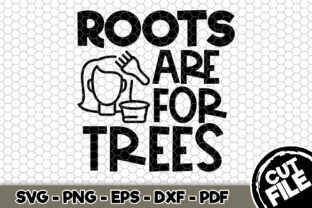
Roots Are for Trees: A Designer’s Real-World Review
As an embroidery designer who has spent years translating digital concepts into stitched reality, I approach every new machine embroidery design with a mix of curiosity and skepticism. We have all been there: you download a file that looks crisp on the screen, only to find it puckers the fabric or loses its legibility once the needle hits the cloth. That is why I took a close look at Roots Are for Trees, a graphic asset that has been generating buzz among crafters and small business owners. This is not just another pretty picture; it is a statement piece for hair stylists and beauty professionals, and evaluating its potential requires looking beyond the preview image.
First Impressions and Visual Personality
The first thing that strikes you about Roots Are for Trees is its attitude. It is witty, professional, and instantly recognizable to anyone in the beauty industry. The layout typically features bold, confident typography paired with organic, root-like elements. From a design perspective, this contrast between structured lettering and natural shapes creates a balanced visual weight. It does not feel cluttered. For an embroidery project, this is crucial. Complex, overly detailed graphics often fail in thread because stitches have physical thickness. This design, however, appears to respect the limitations of the medium.
The mood it creates is one of empowered professionalism. It is perfect for a stylist who wants to brand their workspace or their wearable merch with a touch of humor. When I visualize this as a finished product, I see it working best where clarity is key. The visual personality is modern and clean, avoiding the trap of looking dated or overly ornate. For Etsy sellers and craft business owners, this kind of clear, message-driven design is gold because it communicates value immediately without needing explanation.
Real-World Application: The Stylist’s Apron Test
To truly evaluate an embroidery file, you have to imagine it in use. Let us consider a real-life scenario: creating a custom apron for a high-end salon owner. An apron is a high-visibility item. It needs to withstand frequent washing, exposure to chemicals, and constant movement. If I were stitching Roots Are for Trees onto a canvas or twill apron, I would be looking closely at the stitch types used in the text.
If the design relies heavily on satin stitch for the lettering, it will provide a beautiful, glossy finish that pops against matte fabric. However, if the letters are too thin, they might sink into the fabric or break after repeated wash cycles. On the other hand, if the designer has utilized a fill stitch or a sturdy running stitch outline, the durability increases significantly. In my assessment, this design seems suited for medium-to-large hoop sizes, allowing the text to breathe. Cramping this quote into a tiny 4x4 hoop would likely compromise readability, turning a clever slogan into a blurry mess.
Beyond aprons, think about sweatshirt embroidery. A crewneck sweatshirt is a staple for salon staff uniforms. The texture of fleece or cotton blend requires careful attention to stitch density. If the design is too dense, it will create a stiff, cardboard-like patch on the chest. If it is too light, the fabric might show through. Roots Are for Trees appears to have enough open space to avoid excessive bulk, making it a strong candidate for comfortable, wearable custom apparel.
Navigating Fabric and Technical Challenges
While the design is strong, no digital embroidery file is universal. There are specific situations where you need to proceed with caution. For instance, using this on stretchy fabrics like jersey t-shirts requires a robust stabilizer strategy. Without proper backing, the tension from the stitches can cause the fabric to pucker around the roots and letters, distorting the message. I always recommend testing on scrap fabric first, especially when working with knits.
Another consideration is thread colors. This design likely relies on contrast. If you are stitching white thread on a light gray shirt, the details will vanish. For dark fabrics, you might need to adjust the underlay stitches or add a border to ensure the design stands out. Additionally, if you are attempting to scale this down for a small embroidered patch or a cap, you must verify that the smallest details in the "roots" do not become so fine that they break during stitching. Caps are curved surfaces, and distortion is a real risk. I would advise keeping the design centered and avoiding the side seams where the fabric stretches unevenly.
It is also worth noting that while this product is described as compatible with paper crafting programs like Cricut Explore and Silhouette, our focus here is on needle and thread. If you are a hybrid creator selling both vinyl decals and stitched goods, ensure you are using the correct file type for your embroidery machine. Do not assume a SVG cut file will translate perfectly to an embroidery format without checking the stitch pathing.
Commercial Value and Brand Consistency
For small shop product lines, consistency is everything. Roots Are for Trees offers a cohesive look that can be applied across various design assets. Imagine offering a bundle: a stitched tote bag, a matching pillow cover for the salon waiting area, and a set of kitchen towels for retail sale. The consistent use of this graphic builds brand recognition. Customers trust professionalism, and a well-executed embroidery job signals quality.
When creating printable mockup previews for your online store, pay attention to how the light hits the stitches. Satin stitches reflect light differently than fill stitches. Highlighting this texture in your photos can increase buyer engagement. For holiday embroidery gifts, such as a personalized present for a hairstylist friend, this design adds a personal touch that mass-produced items lack. It transforms a simple garment into a personalized gift with emotional resonance.
Practical Notes for the Embroiderer
Before you commit to stitching this on a client’s expensive garment, here are my top practical tips:
- Check the License: Always confirm whether the file allows for commercial use. Just because you bought the Graphics file does not automatically mean you can sell thousands of stitched shirts. Read the terms carefully.
- Test Stitch Density: Run a test on similar fabric to your final product. Check if the back of the embroidery is clean and if the front lies flat.
- Contrast is Key: Use high-contrast thread colors. If the design is intricate, avoid using variegated thread which can obscure the details of the text.
- Hoop Size Matters: Ensure your hoop is large enough to accommodate the full width of the quote without resizing it to the point of illegibility.
- Stabilizer Selection: Use a cut-away stabilizer for garments that will be washed frequently, ensuring the design remains stable over time.
In conclusion, Roots Are for Trees is a compelling addition to any designer’s library, particularly those serving the beauty and wellness niche. It balances wit with aesthetic appeal, provided it is executed with technical precision. By respecting the fabric, choosing the right stabilizer, and understanding the limits of your machine, you can turn this digital asset into a high-value handmade product that customers will love. It is not just a design; it is a tool for building a professional, creative brand.