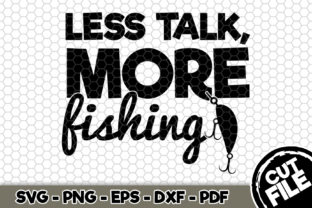
Less Talk More Fishing: A Designer’s Real-World Review
As an embroidery designer who has spent years translating digital concepts into stitched reality, I approach every new machine embroidery design with a critical eye. It is not enough for a graphic to look good on a screen; it must hold up under the needle, survive the wash, and appeal to the end customer. Recently, I evaluated Less Talk More Fishing, a craft file featuring a popular fishing quote, to determine its viability for real-world projects. This review breaks down how this asset performs when moved from the realm of general Graphics and Crafts into tangible, stitched products.
First Impressions and Visual Personality
The phrase "Less Talk More Fishing" carries an immediate, relaxed mood. It appeals to a specific demographic: the angler who values patience and silence over social chatter. Visually, the design relies on strong typography and likely incorporates thematic elements like hooks, lines, or fish silhouettes, depending on the specific iteration of the quote. For an embroidery project, this simplicity is often a strength. Complex, overly detailed illustrations can become muddy when stitched, but a bold statement piece like this tends to read clearly from a distance.
When I first loaded the file into my editing software, I looked at the balance between positive and negative space. The layout feels natural for horizontal applications, such as the chest of a sweatshirt or the center of a tote bag. The visual personality is rugged yet approachable, making it versatile for both masculine and unisex custom apparel. It does not scream for attention with neon brightness but rather invites a closer look, which is exactly what you want in a handmade product.
Real-World Application: The Tote Bag Test
To truly understand the value of an embroidery file, you must imagine it on a physical object. I envisioned using Less Talk More Fishing for a custom canvas tote bag design. Canvas is a sturdy fabric that handles stitch density well, providing a stable base for the text. In this scenario, the design serves as a functional badge of identity for the user. Imagine a customer buying this for a father’s day gift or a birthday present for an avid angler. The clarity of the lettering is crucial here. If the stitches are too dense, the fabric might pucker; if they are too sparse, the backing might show through.
This design also translates beautifully to sweatshirt embroidery. A crewneck sweatshirt offers a large, flat surface area on the back or chest. Here, the quote can be scaled up to make a bold statement. The contrast between the thread colors and the fabric becomes the primary driver of visual appeal. A navy blue sweatshirt with cream or silver thread creates a classic, nautical feel that aligns perfectly with the fishing theme. This kind of personalized gift has high perceived value because it feels bespoke, even if the design itself is a pre-made digital asset.
Navigating Technical Challenges
While the concept is strong, practical execution requires attention to detail. One must consider where this design should be used carefully. For instance, applying this to an embroidered patch requires precise digitizing. If the original file is a vector graphic intended for cutting machines like Cricut or Silhouette, it may not be optimized for embroidery out of the box. You must check if the file includes a native embroidery format or if you need to digitize it yourself. If you are working with the provided SVG, PNG, or EPS files, remember that these are graphics, not stitch files. You will need to convert them, paying close attention to stitch density and underlay.
Small hoop sizes present another challenge. If you attempt to shrink this design for a cap or a baby item, the legibility of the text may suffer. Tiny lettering can easily turn into a blob of thread if the running stitch or satin stitch widths are not adjusted. For baby embroidery, softness is key. High-density fill stitches can feel scratchy against sensitive skin. In such cases, consider simplifying the design or using lighter weight threads to maintain comfort without sacrificing the message.
Textured fabrics and stretchy materials also demand caution. On a textured towel, fine details might get lost in the loops of the terry cloth. On stretchy jersey knits, proper stabilizer use is non-negotiable to prevent distortion. Always test the design on scrap fabric that matches your final material. This step saves time and prevents wasted materials, especially when producing items for a craft business.
Commercial Viability for Etsy Sellers
For Etsy sellers and small shop owners, the commercial potential of Less Talk More Fishing is significant. Niche hobbies like fishing have dedicated communities willing to pay for specialized gear. This design fits seamlessly into a lineup of holiday embroidery gifts, such as Father’s Day or Christmas presents. It can also be part of a broader collection of outdoor-themed design assets.
However, professionalism is paramount. Before listing finished items, ensure you have the correct licensing. Since the product description mentions it is a craft file for cutting machines, verify if the creator grants commercial rights for embroidered goods. Many designers sell separate licenses for physical vs. digital sales. Using a design without proper clearance can lead to account suspensions or legal issues. Assuming the license permits it, this design can enhance brand consistency for shops focusing on outdoor lifestyles.
Creating high-quality printable mockup images is essential for online sales. Show the design on various backgrounds—dark denim, light linen, and vibrant cotton. This helps buyers visualize the finished product and increases buyer engagement. Highlight the texture of the stitches in your photos to emphasize the handmade quality, distinguishing your item from mass-produced printed alternatives.
Practical Designer Notes
To get the best results from Less Talk More Fishing, follow these practical steps:
- Test on Scrap Fabric: Always run a test stitch-out on the same fabric type you intend to use for the final product. Check for puckering, thread breaks, or registration issues.
- Check Thread Color Contrast: Ensure your thread colors stand out against the fabric. High contrast improves readability, especially for text-based designs.
- Review Stitch Density: If digitizing from the provided graphics, adjust the density to suit the fabric weight. Heavy density on thin fabric causes stiffness and distortion.
- Confirm Hoop Size: Measure the design dimensions against your machine’s maximum hoop size. Ensure there is enough margin for clamping.
- Inspect Small Details: Zoom in on corners and tiny elements. Simplify any details that are too small to stitch cleanly.
- Use Proper Stabilizer: Select the right stabilizer (cut-away for knits, tear-away for wovens) to support the stitches during and after embroidery.
- Verify Licensing: Confirm whether the license allows for commercial sale of physical embroidered items. Do not assume rights based on the file format alone.
Final Verdict
Less Talk More Fishing is a solid choice for designers looking to tap into the outdoor and hobbyist markets. Its strength lies in its clear message and versatile layout. While it requires careful technical handling—particularly regarding digitizing if starting from vector files—it offers great potential for commercial embroidery projects. By focusing on fabric selection, stitch optimization, and proper licensing, you can transform this digital graphic into a high-value small shop product that resonates with customers. Whether for a rugged apron, a cozy pillow cover, or a stylish cap, this design delivers when treated with professional care.